
What is an HOA?
An HOA, or homeowners association, is an organization that governs a residential community and sets rules for how homes and shared spaces can be used. If you buy a home in an HOA, membership is automatic and the fees are mandatory. There's no opting out.
Most HOA communities have shared assets (a pool, gym, clubhouse, entrance landscaping) that need ongoing maintenance and someone to pay for it. The HOA is that someone. It collects dues from every homeowner, manages the money, and makes sure the shared property stays in good shape. There are roughly 370,000 HOA communities in the US today, covering about 28 million housing units, around 30% of all American homeowners.
Who runs it?
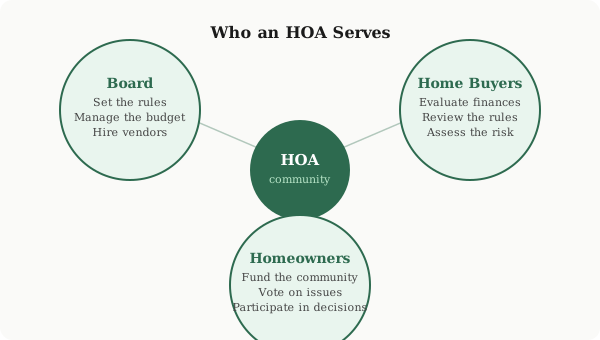
A volunteer board of homeowners, usually 3 to 7 people, elected by the community. They handle the budget, enforce the rules, hire vendors, and make decisions on behalf of everyone who lives there. Most board members are your neighbors doing this in their spare time, not professionals.
In larger communities or condo buildings, the board often hires a management company to handle day-to-day operations. In smaller communities, the board does it themselves. These are called self-managed HOAs, and there are roughly 110,000 to 150,000 of them in the US.
What does an HOA actually do?
It maintains shared property and enforces community standards. What that covers depends entirely on the community.
In a typical single-family HOA, the association maintains:
- Common areas like entrances, landscaping, and parks
- Amenities like pools, tennis courts, or clubhouses
- Roads or sidewalks if they're privately owned by the community
In a condo association, the HOA covers much more: exterior building maintenance, roofs, elevators, hallways, and sometimes even water and trash.
The rules themselves live in a document called the CC&Rs (Covenants, Conditions, and Restrictions). This is the legal agreement every homeowner agrees to when they buy in. It covers things like fence heights, paint colors, parking rules, pet policies, and rental restrictions.
What do HOA fees pay for?
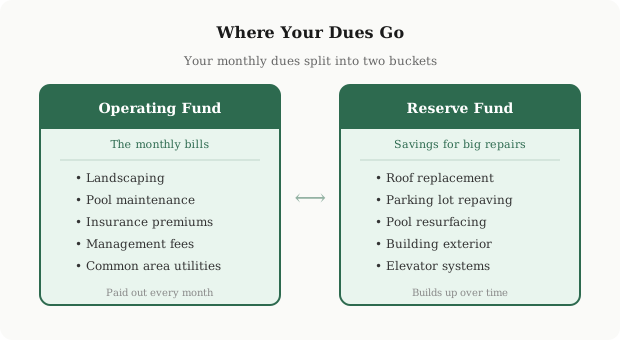
Two buckets: operating expenses and reserves.
Operating expenses are the ongoing costs: landscaping, pool maintenance, insurance, management fees, utilities for common areas. For a typical single-family HOA, dues run $200 to $500 per month per household. Condos tend to run higher because the association covers the building itself.
Reserves are savings set aside for major future repairs: repaving the parking lot, replacing the roof, resurfacing the pool. Industry guidance suggests HOAs put aside enough to cover 70-100% of their projected future costs, though many fall short of that. A well-run HOA funds reserves consistently so big repairs don't arrive as a surprise. A poorly-run one doesn't, and homeowners end up paying a special assessment (a one-time charge on top of regular dues) when something breaks.
How do residents participate?
As a resident, you should expect to be quite involved with your HOA. There are many places to get engaged and influence decisions.
The annual meeting is the main one. It's open to all homeowners and is where board elections happen, the budget gets presented, and major decisions get made. Attendance is usually low, which is part of why boards sometimes make decisions residents later disagree with.
Beyond the annual meeting:
- Board meetings are typically open to residents (required by law in most states) and happen monthly or quarterly. You can attend, observe, and usually speak during an open comment period.
- Voting rights kick in for bigger decisions: CC&R amendments, special assessments above a certain threshold, and board elections all require homeowner votes.
- ARC requests (Architectural Review Committee) are how you get approval for changes to your property: a new fence, a paint color, an addition. The board reviews and approves or rejects them.
- Violation hearings give you the right to appear before the board and make your case before fines escalate.
The boards that work best treat residents as partners, not just fee-payers. Regular communication, surveys, and genuinely open meetings make a real difference in how well a community functions.
What do you give up when you buy in an HOA?
Some control over your own property. You can't paint your house a color the board hasn't approved. You might not be able to park an RV in your driveway, rent out your home on Airbnb, or build a fence without submitting an ARC request.
How restrictive this feels depends entirely on the community. Some HOAs are hands-off and mainly exist to keep the pool running. Others enforce rules aggressively and send violation notices for a basketball hoop left in the driveway. Worth knowing before you buy.
Is an HOA worth it?
Honestly, it depends on what you're buying. A condo without an HOA doesn't make much sense. Someone has to maintain the building. For single-family homes, the value is less obvious.
HOA communities vary too much for a simple answer on property values. What's consistent is that a well-funded, well-run HOA maintains shared assets that protect everyone's investment. A financially stressed HOA (one with low reserves, deferred maintenance, or pending litigation) is a real risk to your home's value.
The financials are the thing most buyers skip. They shouldn't.
FAQ
Can you refuse to join an HOA when you buy a home?
No. If the home is in an HOA, membership is a condition of purchase. You agree to the CC&Rs and the fee structure at closing. There's no opt-out after the fact either.
What happens if you don't pay HOA fees?
The HOA can place a lien on your property and, in most states, eventually foreclose on it. This actually happens. Unpaid dues are taken seriously because the association depends on that revenue to operate.
Who enforces HOA rules?
The board, or a management company on their behalf. Enforcement varies a lot by community. Some HOAs send violation notices quickly and follow up consistently. Others are more relaxed. You can usually get a sense of this by reading board meeting minutes before you buy.
What's the difference between an HOA and a condo association?
Mostly what they own and maintain. An HOA in a single-family community typically maintains common areas but not individual homes. A condo association usually owns the building structure itself and maintains exteriors, roofs, and shared systems. Condo fees tend to be higher because of this.
What happens if an HOA runs out of money?
The board has a few options, and none of them are good. The most common is a special assessment, a one-time charge to every homeowner on top of regular dues. These can range from a few hundred dollars for a minor repair to tens of thousands per household for something major like a roof replacement or structural work. Some HOAs take out a loan instead, which gets repaid through higher dues over time. Either way, the cost lands on homeowners. An underfunded reserve is almost always the root cause, which is why checking a community's reserve fund health before you buy matters more than most buyers realize.